NEPAL
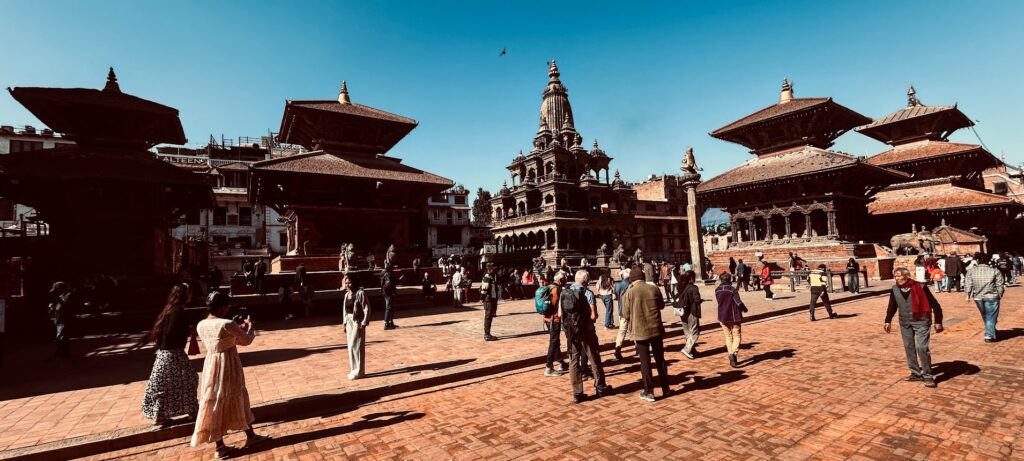
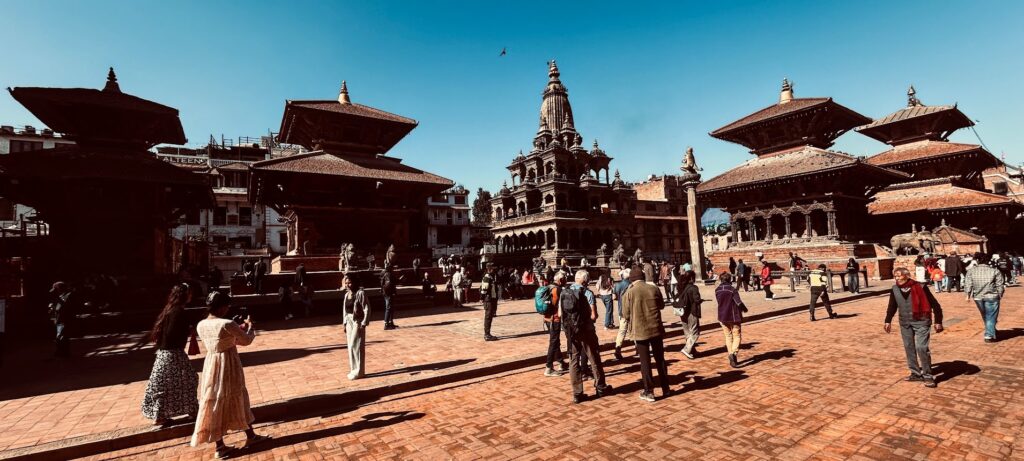
The Patan Darbar Square (often spelled Patan Durbar) is one of the three Darbar Squares in the Kathmandu Valley, Nepal, and is a UNESCO World Heritage Site. It is a marvelous display of Newar architecture, characterized by intricate wood carvings, red brickwork, and stunning bronze statues.
Here is a breakdown of what makes this “Square of the Gods” so significant:
1. Historical Significance
Located in the center of the city of Lalitpur (meaning “City of Beauty”), the square serves as the former royal palace complex of the Malla Kings of Lalitpur. Most of the current structures were built during the 1600s, though the foundations are much older.
2. Key Architectural Highlights
The square is packed with temples and shrines, but a few stand out as absolute masterpieces:
- Krishna Mandir: The most famous temple in the square. Built in 1637, it is made entirely of stone (unusual for the region) and features 21 gilded pinnacles. The carvings depict scenes from the Mahabharata and Ramayana.
- Patan Museum: Housed in a restored wing of the royal palace, it is widely considered one of the best museums in South Asia. It displays a world-class collection of bronze statues and religious objects.
- The Golden Temple (Hiranya Varna Mahavihar): A unique Buddhist monastery just north of the square, famous for its gold-plated facade and large prayer wheels.
- Taleju Bhawani Temple: A towering, multi-roofed temple dedicated to the personal deity of the Malla Kings.
3. The Three Courtyards (Chows)
The main palace complex is divided into three primary courtyards, each with its own purpose:
- Mul Chowk: The central and oldest courtyard.
- Sundari Chowk: Known for the Tusha Hiti, a royal sunken bath featuring exquisite stone carvings of Hindu deities.
- Keshav Narayan Chowk: Now home to the Patan Museum.
4. Cultural Life
Patan Darbar is not just a museum of the past; it is a living site.
- Festivals: It is the focal point for festivals like Krishna Janmashtami, where thousands of pilgrims visit the Krishna Mandir.
- Artisans: The surrounding alleys are still home to master metal-workers and wood-carvers who have passed down their crafts for generations.
Note: The square suffered significant damage during the 2015 earthquake. However, thanks to extensive international and local restoration efforts, most of the major structures have been meticulously rebuilt using traditional techniques.
Leave a Reply